Wrinkles, acne scars, rough texture, and sun damage can become difficult to improve with skincare alone. A CO2 laser for face treatment resurfaces damaged tissue while encouraging collagen production beneath the surface. At Carolina Facial Plastics, each laser treatment is selected according to the patient’s concerns, skin type, treatment area, and preferred recovery.
What Is a CO2 Laser for the Face?
A CO2 laser for face treatment is an ablative laser treatment that removes damaged surface skin while delivering heat below the surface. The technology uses carbon dioxide laser energy to improve wrinkles, scars, discoloration, and uneven skin texture.
Unlike gentler cosmetic procedures, an ablative laser removes a thin layer of damaged tissue. As the skin heals, the body replaces older cells with new skin and begins producing new collagen fibers.
For facial rejuvenation, carbon dioxide lasers are commonly used to improve:
- Fine lines and deep wrinkles
- Acne scarring
- Rough or uneven skin texture
- Enlarged pores
- Sun damage and sun-damaged skin
- Certain surgical scars
- Other visible signs of aging
A consultation determines whether CO2 laser resurfacing, a lighter fractional laser, or another option is the best fit.

How Does Laser Skin Resurfacing Work?
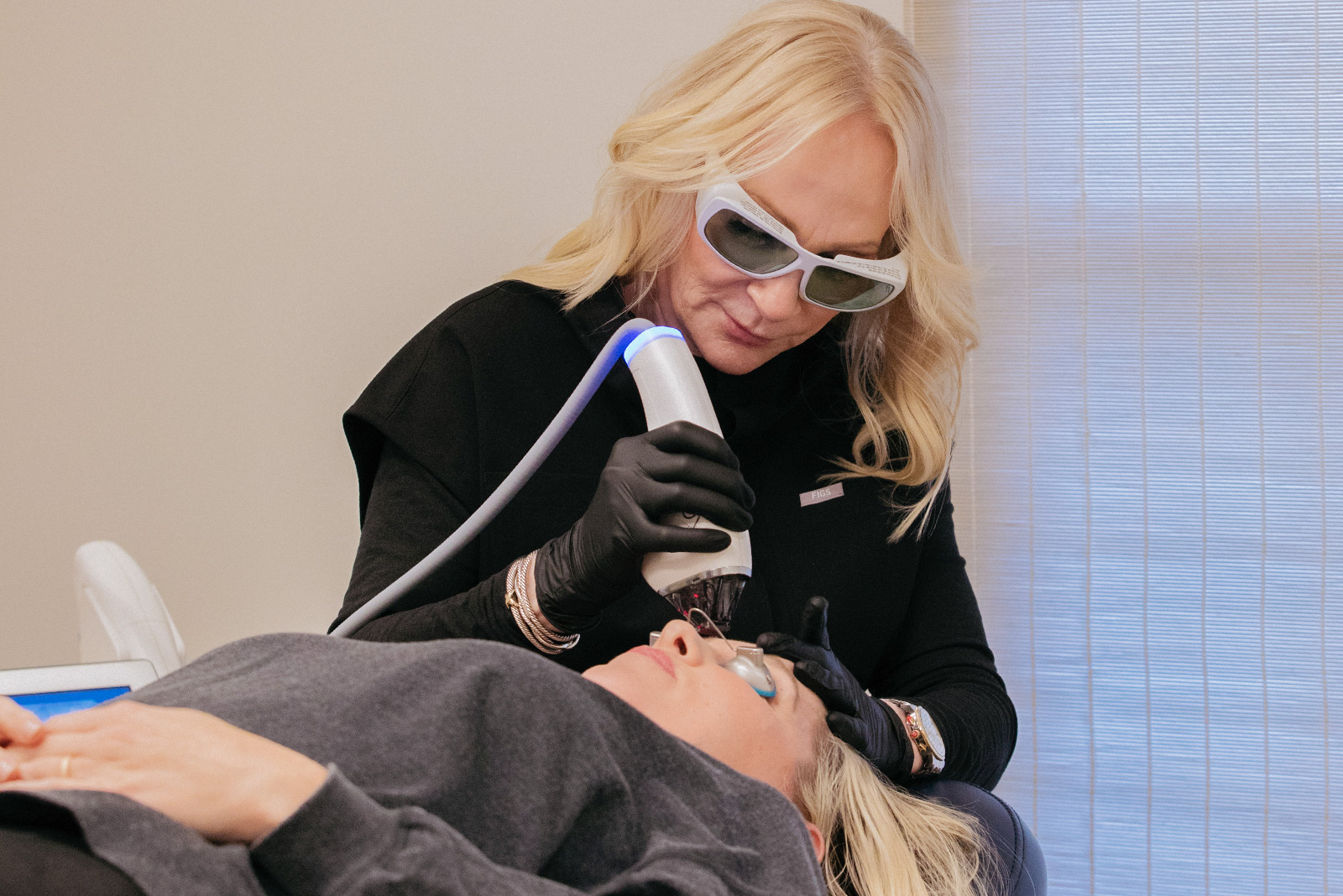
Laser skin resurfacing works by directing controlled laser energy into the treated area, removing damaged outer layers and beginning a natural healing response. As the skin heals, healthier skin appears, while heat below the surface stimulates collagen production.
The carbon dioxide wavelength is readily absorbed by water in the skin. When the laser beam reaches the treatment area, it creates precise columns of thermal injury. The provider can adjust treatment depth and density while limiting unnecessary heat in the surrounding tissue.
The treatment removes damaged cells that contribute to roughness, discoloration, and lines. Meanwhile, deeper heat encourages collagen fibers to reorganize.
Although laser resurfacing may mildly tighten skin, it does not reposition deeper facial tissue. Patients with significant sagging skin or advanced skin laxity may benefit more from cosmetic surgery or another treatment designed for structural lifting.
What Can CO2 Laser Resurfacing Improve?
CO2 laser resurfacing can improve wrinkles, acne scars, sun damage, enlarged pores, and uneven texture when gentler treatments have not produced enough improvement.
Fine Lines and Deep Wrinkles
Repeated movement, collagen loss, and heavy sun exposure can create etched lines around the eyes and mouth. CO2 laser treatment removes damaged cells and stimulates collagen production, helping these lines appear softer.
Acne Scarring
A fractional carbon dioxide laser creates microscopic channels through uneven tissue. During the healing process, new support forms around the treated area, gradually improving rolling scars, boxcar scars, and skin texture.
However, deep ice pick scars may require a combined approach. Active acne should also be controlled before aggressive laser skin resurfacing is performed.
Sun Damage and Uneven Skin Color
Years of heavy sun exposure may cause roughness, brown spots, uneven skin color, and premature lines. Laser carbon dioxide resurfacing removes areas of sun-damaged skin and allows clearer new skin to emerge.
Selected surgical scars may also become smoother and less noticeable after laser treatment. However, resurfacing cannot completely remove a scar. Raised keloid scars generally require a different approach and should be carefully evaluated before treatment.
How Does a Fractional Carbon Dioxide Laser Work?
A fractional carbon dioxide laser creates narrow treatment columns while leaving small areas of untreated skin between them. These untreated areas help the surrounding tissue support a more efficient healing process.
Fractional laser resurfacing can provide:
- Precise control over treatment depth
- Faster healing than traditional full field resurfacing
- Less thermal injury to surrounding tissue
- Custom treatment for a small or full face treatment area
- Different intensities based on the patient’s goals
Traditional laser carbon dioxide resurfacing removes a more complete surface layer. It may provide greater correction for deep wrinkles or advanced sun damage, although recovery is longer.
Carolina Facial Plastics also offers CoolPeel using the Tetra CO2 laser. This approach uses short pulses of laser energy to reduce lingering heat while improving skin texture, pores, and early visible signs of aging.

Who Is a Good Candidate for CO2 Laser Treatment?
Good candidates for CO2 laser treatment are generally healthy, have realistic expectations, and can follow detailed post-treatment care.
Before recommending an ablative laser treatment, the provider will review the patient’s medical history, previous cosmetic procedures, medications, healing history, and current skin conditions.
Treatment may be delayed for active acne, infection, open wounds, recent tanning, certain medical conditions, melasma, or a history of keloid scars.
Can Darker Skin Tones Have CO2 Laser Resurfacing?
Some patients with darker skin tones may be candidates, but deeper CO2 laser resurfacing requires caution because increased melanin can raise the risk of post-inflammatory hyperpigmentation.
During the consultation, the provider may consider Fitzpatrick skin types, natural skin color, tanning history, and previous pigmentation changes. For darker skin, the plan may involve:
- More conservative laser energy
- A lighter fractional laser approach
- Skin preparation before treatment
- Strict sun protection
- A series of gentler sessions
- Another technology with a lower pigmentation risk
In some cases, a YAG laser, RF microneedling, or another treatment may be more appropriate for darker skin tones. Careful selection protects the treated skin and reduces avoidable changes in skin color.
How Should You Prepare for a Laser Treatment?
Preparation instructions depend on the patient’s medical history, skincare routine, skin conditions, and selected treatment area.
Patients are asked to:
- Avoid tanning and heavy sun exposure
- Use broad-spectrum sun protection
- Pause retinoids, glycolic acid, or exfoliating products when instructed
- Disclose medications, supplements, and recent procedures
- Tell the provider about previous cold sores
- Arrange transportation if sedation is planned
- Purchase approved recovery products before the treatment session
Patients with a history of cold sores may receive antiviral medication before CO2 laser treatment. However, medications should only be started or stopped under medical guidance.
What Happens During a CO2 Laser Treatment Session?
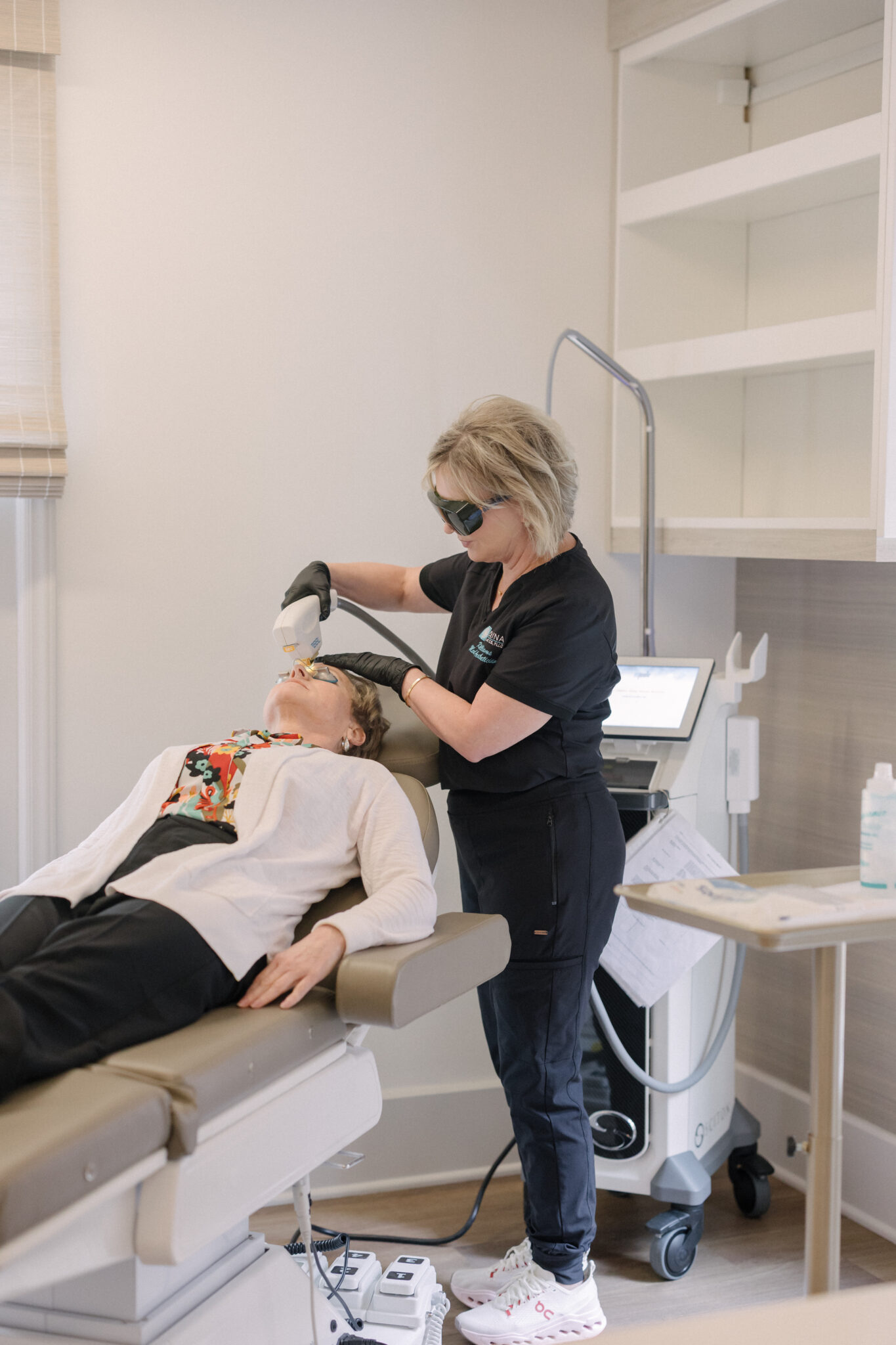
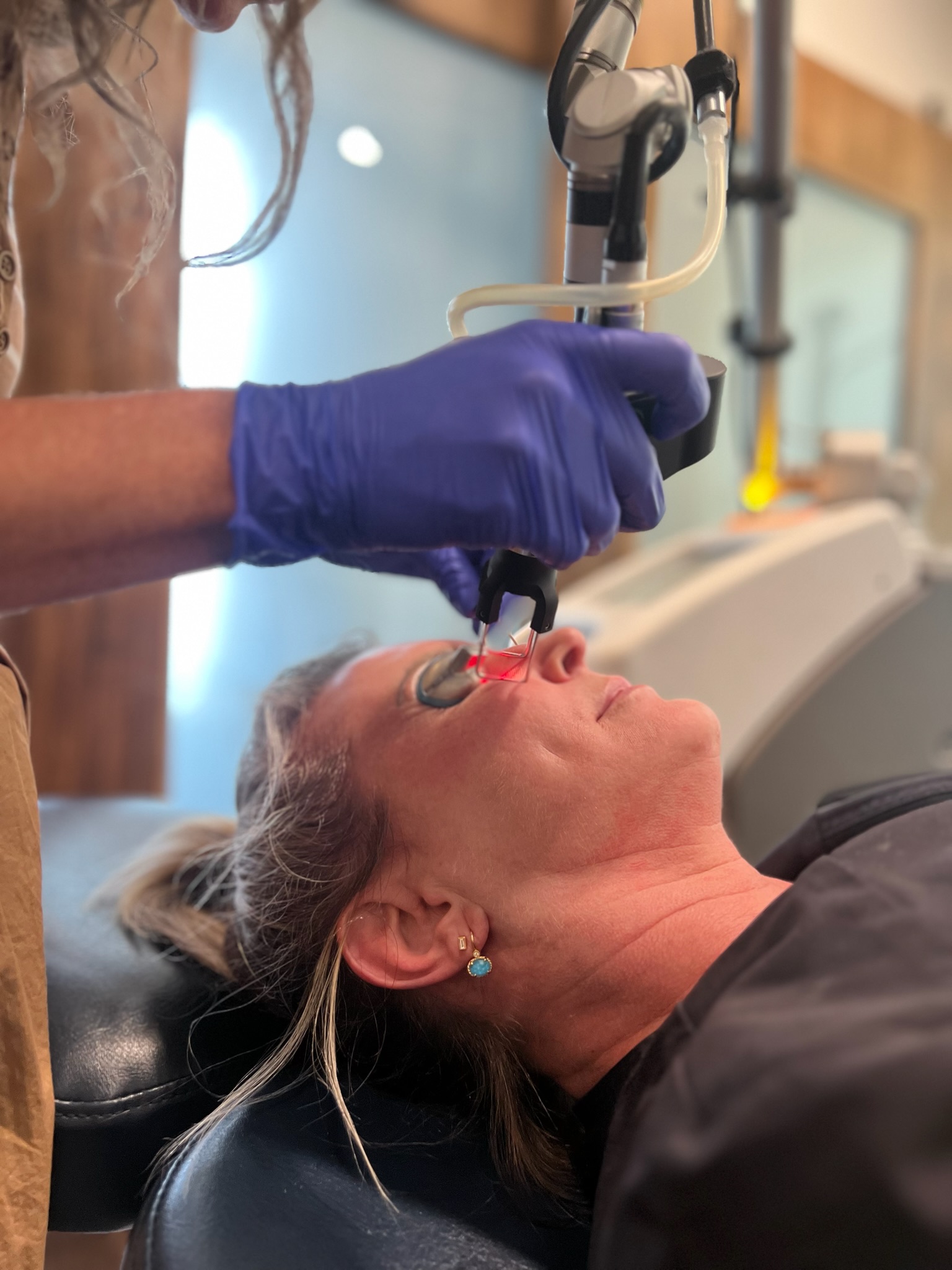
A treatment session begins with cleansing, photographs, and a topical or local anesthetic. Deeper resurfacing may require additional comfort medication, laughing gas, or sedation.
During the outpatient procedure:
- Protective eyewear is placed.
- The provider maps the treatment area.
- The laser beam moves across the skin in a controlled pattern.
- The device delivers carefully selected laser energy.
- A protective ointment or dressing is applied.
Appointment length depends on the treatment area and intensity. Patients may feel warmth or prickling. Afterward, cool air or an ice pack wrapped in a clean cloth may reduce discomfort.
What Is the CO2 Laser Recovery Timeline?
Recovery after CO2 laser resurfacing depends on the treatment depth, the size of the treated area, and the patient’s individual healing process. Lighter fractional treatments may involve several days of redness, dryness, and peeling, while deeper ablative laser treatment can require one to two weeks of more visible healing.
First 24 Hours
The treated skin may appear red, swollen, and sensitive. It can also feel warm, similar to a strong sunburn. Gentle cleansing, approved ointment, and cool compresses may be recommended.
Days Two Through Four
Swelling may continue, especially around the eyes. The treated area can feel dry, tight, or rough as damaged cells rise toward the surface. Proper skincare should remain simple and gentle.
Days Five Through Seven
Peeling and flaking often become more noticeable. As the skin heals, healthier skin begins to appear beneath the outer layers. Pinkness and sun sensitivity may remain after peeling improves.
Patients should contact the practice if they develop worsening pain, spreading redness, fever, blistering, or drainage such as thick yellow liquid.
How Should You Care for Treated Skin?
Consistent post-treatment care protects new skin during the healing process. Because treated skin is vulnerable to irritation and sun sensitivity, instructions should be followed carefully.
During recovery:
- Use only approved gentle skincare.
- Do not scrub, peel, or pick the skin.
- Avoid glycolic acid, retinoids, and exfoliating products.
- Keep the treated area moisturized as directed.
- Avoid excessive heat, sweating, and strenuous exercise.
- Delay makeup until the skin has closed.
- Maintain strict sun protection and wear a hat outdoors.
Once healing is complete, proper skincare helps maintain smoother skin and reduce future sun damage.
When Will CO2 Laser Results Appear?
Initial improvement may become visible after peeling subsides, but the result continues to develop as inflammation fades and collagen production increases.
Most patients may notice:
- Smoother skin texture
- Softer fine lines
- More even skin color
- Reduced visible sun damage
- Less noticeable pores
- Gradual improvement in acne scarring
Over the following months, the treatment continues to stimulate collagen production. As new collagen fibers strengthen the skin, deeper improvements may become more visible.
Some patients achieve meaningful change after one deeper CO2 laser treatment, while lighter fractional treatments may require a series.
How Does CO2 Compare With Other Lasers?
Different devices target different skin concerns. Therefore, other lasers may be better suited for redness, pigmentation, darker skin tones, or patients seeking minimal recovery.
Erbium lasers also remove damaged surface cells but may create less thermal injury in selected patients. A YAG laser penetrates differently and may be used for vascular concerns or certain treatments in darker skin.
Intense pulsed light is not a true laser. Instead, it uses multiple wavelengths of light to address redness and brown spots. While intense pulsed light can improve uneven tone, it does not provide the same degree of skin resurfacing for deep wrinkles or acne scarring.
Access to several technologies allows the provider to match the procedure to the patient’s skin concerns rather than relying on one device for every condition.
Why Choose Carolina Facial Plastics for CO2 Laser Resurfacing?
Carolina Facial Plastics offers Tetra CO2 laser resurfacing and CoolPeel, allowing the team to select a treatment intensity based on each patient’s skin, concerns, and recovery preferences.
Led by Jonathan Kulbersh, MD, a double board-certified facial plastic surgeon with more than 20 years of experience, the practice focuses exclusively on the face. This specialized perspective helps patients understand whether laser skin resurfacing, another nonsurgical treatment, or cosmetic surgery is most likely to address their concerns.
The team also has access to more than 12 laser and energy-based devices. As a result, patients can receive a treatment plan that considers their skin types, medical history, desired improvement, and available recovery time.
Discover Smoother Younger-Looking Skin With CO2 Laser Resurfacing in Charlotte
Persistent wrinkles, acne scarring, surgical scars, and sun-damaged skin may require more than topical products. A personalized CO2 laser for face treatment can remove damaged cells, improve skin texture, and stimulate collagen production for gradual, natural-looking facial rejuvenation.
Voted Charlotte’s #1 medspa and facial plastic surgery practice in the BOB Awards, Carolina Facial Plastics offers advanced CO2 laser resurfacing in Charlotte, along with fractional treatments and CoolPeel, based on each patient’s skin concerns and recovery goals.
Schedule a consultation to discover which laser treatment can help create healthier, smoother, and more even-looking skin.